

Key takeaways
- Age matters, but condition matters more.
- Granules in the gutters and curling shingles point to a surface that is wearing out.
- Daylight through the roof boards or stained decking means water has a way in.
- Leaks that keep returning usually mean the whole roof is failing, not one spot.
- Do your checking from the ground and the attic floor, not from the roof.
Start with the age of the roof
Find out how old your roof is. Basic three-tab asphalt shingles often last around 15 to 20 years, and architectural asphalt shingles commonly 20 to 30 years. Those are general ranges. Hot summers, freeze-thaw winters, hail, and poor attic ventilation can all cut into them.
Age alone is not a reason to replace a roof. A roof in its late teens that is lying flat and shedding water well can be left alone. But once a roof is in the later part of its expected range, small signs deserve more attention, and it makes sense to start planning. Replacing a roof on your schedule, with time to compare quotes, is much better than replacing it in a hurry after a leak.
If you do not know the age, look through closing documents, ask neighbors with similar homes, or contact your city or township about permit history.
What worn shingles look like from the ground
You can learn a lot with a pair of binoculars and a walk around the house.
Granule loss. The gritty surface on asphalt shingles protects the material beneath from sun. Look in your gutters and at the base of downspouts for sand-like grit. On the roof, bald patches where the dark asphalt or fiberglass mat shows through are a sign of advanced wear. Some loose granules on a brand new roof are normal; a steady amount on an older roof is not.
Curling and cupping. Shingle edges that turn upward, or centers that lift, mean the shingle has dried out. Poor ventilation, which cooks shingles from below, makes this worse.
Cracked, missing, or lifted shingles. A few after a storm can be repaired. Many across several slopes suggest the roof is aging out.
Moss and algae. Dark streaks are often cosmetic. Thick moss on shaded slopes holds moisture against the roof and can lift shingles.
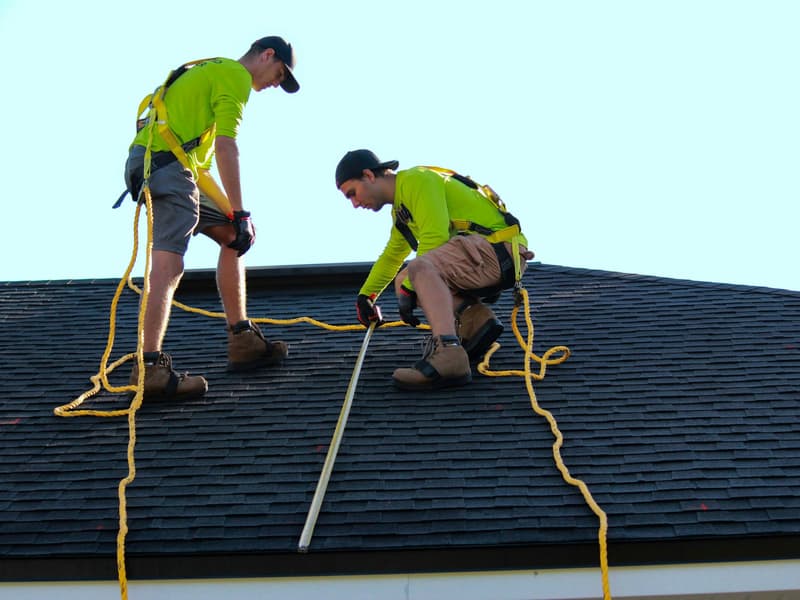
Do not climb onto the roof to check. Wet leaves, frost, loose granules, and steep pitches make falls common, and a fall can be serious. If something needs a closer look, that is a job for a roofer.
What the attic and ceilings tell you
Go into the attic on a bright day and turn the lights off. Pinpoints of daylight coming through the roof deck, other than at designed vents, mean there are gaps or holes where water can get in.
Look also for:
- Dark stains or streaks on the underside of the roof boards
- Damp or compressed insulation
- Rusted nail tips poking through the deck, which often point to condensation and poor ventilation
- A musty smell or visible mold
- A deck that sags between rafters
A sagging roofline or deck is serious. Stay out from under it and have a roofer or structural professional look at it promptly.
Inside the house, check ceilings and the tops of walls for stains, peeling paint, or bubbling. Stains do not always sit directly under the leak, since water can run along rafters before it drips.
When you are in the attic, step only on the joists or on boards laid across them. Stepping between joists can put your foot through the ceiling. In summer, attic heat can build quickly, so go in during the morning and do not stay long.
Repeated leaks and when repairs stop making sense
A single leak from a cracked pipe boot, loose flashing, or a few missing shingles is a normal repair. See roof repair for what that looks like.
The pattern changes when leaks keep showing up. If a spot leaks again after being repaired, or new leaks appear in different parts of the roof, the problem is usually the roof surface itself or the deck beneath it. Adding patches to a roof that is failing everywhere tends to be money spent without fixing the cause.
If the leak showed up right after hail or high winds, the cause may be storm damage. Take photos, note the date, and read about storm damage before you contact your insurer.
A simple way to think about it: if the problems are in one area and the rest of the roof looks sound, repair. If problems are spread across the roof, or the roof is already near the end of its range, a roof replacement is usually the better choice.
What to do next
Photograph what you see from the ground and in the attic. Write down dates of leaks and where they appeared. Gather any paperwork about the roof, including permits or past repair invoices.
Then have a roofer inspect it and give you findings in writing. A good inspection covers the shingles, flashing, vents, decking where visible, and the attic. If you cannot get a roofer there right away and water is coming in, put a bucket under the drip and move belongings. Tarping a roof is dangerous and should be done by a professional.
For the full picture of what replacement involves, read Replacing a Roof in Southwest Ohio.
Frequently asked questions
Can I tell how much life my roof has left from the ground?
You can spot warning signs such as granules in the gutters, curled edges, and missing shingles. But a roofer is the one who can judge the condition of flashing, decking, and the shingles up close. Treat your own check as a reason to call, not a final answer.
Is a little granule loss normal?
A small amount of loose granules on a new roof is normal. A steady stream of grit in the gutters on an older roof, or bare spots on the shingles, means the surface is wearing out.
Does one leak mean I need a whole new roof?
Not necessarily. A single leak from flashing or a pipe boot is often a repair. Leaks in multiple places, or a leak that comes back after repair, point to a larger problem.
4 min read.