

Key takeaways
- Read your policy first for deductibles, roof payment terms and reporting deadlines.
- Report the damage promptly, write down your claim number, and protect the home from further damage.
- Be present for the adjuster visit with your photos and notes.
- Compare the insurer's estimate to a roofer's written estimate, line by line.
- Policies differ. This is general information, not legal advice or a promise of any outcome.
Read your policy first
Before you call anyone, find your homeowner's policy and read the parts about wind and hail. You are looking for four things.
- Your deductible. Some policies set a separate deductible for wind and hail, sometimes as a percentage of the home's insured value, so it may differ from your standard one.
- How the roof is paid. Replacement cost pays to replace damaged materials with new ones. Actual cash value subtracts for age and wear. Some policies treat the roof differently from the rest of the house.
- Roof-specific terms. Some policies limit or exclude certain kinds of roof damage, or change payment based on the roof's age.
- Time limits. Policies often set deadlines for reporting a loss and for finishing a claim.
If the wording is unclear, ask your agent to explain it in writing. Policies differ a lot, so treat what follows as a general outline, not advice about your own claim.
Reporting the claim and protecting the home
Report the damage to your insurer or agent soon after the storm. You can usually do it by phone, through an app, or online. You will get a claim number. Write it down with the name and number of anyone you speak to.
Policies generally expect you to take reasonable steps to stop further damage, such as covering a hole or keeping water off a ceiling. Photograph the damage first, keep receipts for materials and emergency work, and keep damaged material until the insurer says you can dispose of it. Tarping a roof is a job for a roofer, not for you on a ladder.
Take your own photos and video from the ground of the roof, gutters, vents, siding and any interior stains, as described in the storm and hail damage guide. Do not go on the roof to do it.
The adjuster visit
The insurer will usually send an adjuster, or in some cases ask for photos, to assess the damage. The adjuster looks at the roof and other damaged items, takes photos and measurements, and writes an estimate based on what they find.
It helps to be home. Walk the adjuster through what you have found, show your photos and notes, and point out anything you noticed inside the house. Ask when and how you will receive the estimate, and take notes on what you are told.
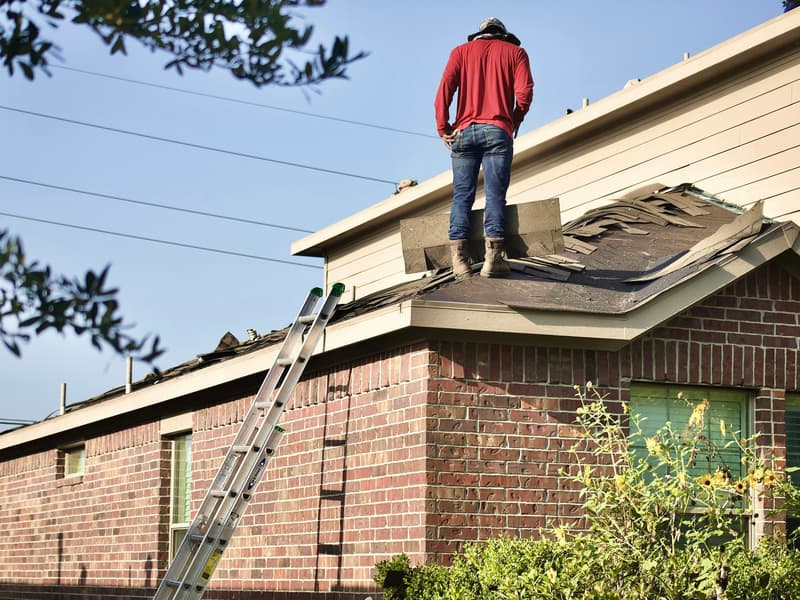
You can also have a roofer of your choice inspect the roof before or after the visit. A roofer can photograph damage, measure the roof and write an estimate for the work, which gives you something to compare with the insurer's figures. If the adjuster agrees, having your roofer present lets them point out damage in person.
The estimate, the payment and disagreements
After the visit you will get a decision: the claim is approved, partly approved, or denied. If it is approved, you will see an estimate of covered repairs. Read it closely and compare it with your roofer's written estimate. Look at roof area, shingle type, flashing, vents, drip edge, underlayment, gutters, removal of old material and permits.
Payment often arrives in stages. Your deductible comes off the top. If your policy pays at replacement cost, you may get a first payment based on actual cash value, with the rest released once the work is done and documented. If a mortgage lender is named on the policy, checks may be made out to both of you, which can add steps.
It is common for an estimate to miss things found once the old roof comes off, such as damaged decking. Roofers often send the insurer a supplement with photos, and the insurer decides whether to approve it. If you disagree with a decision or an amount, ask for the reasons in writing, send your documentation, and check your policy for a dispute process. For a denied or complicated claim, you may want to talk with a licensed professional such as an attorney. Nobody can promise how a claim will turn out.
Choosing the roofer and starting work
In general you choose your own roofer, though it is worth confirming with your insurer. The claim is between you and your insurer, and you are the one who signs. Be careful with anyone who offers to handle the claim for you, promises approval, or offers to cover your deductible. How to avoid storm-chaser roofers explains why.
Before work starts, get a written contract that matches the approved scope, with materials, who pulls permits, the payment schedule and how cleanup is handled. Take photos when the work is done, and keep the estimate, contract, receipts and claim paperwork together in one folder.
If the claim covers a full replacement, see roof replacement for what the work involves.
Frequently asked questions
Do I have to use the roofer my insurer suggests?
In general, no. Most policies let you choose your own roofer, but confirm with your insurer. Get your own written estimate either way so you have something to compare.
What if the insurer's estimate is lower than my roofer's?
Compare the two line by line to see what is different. Ask the insurer for its reasons in writing, send your photos and your roofer's estimate, and check your policy for a dispute process.
Will filing a claim for storm damage cancel my policy?
That depends on your insurer and your state's rules, and no general answer fits every case. Ask your agent how claims are handled under your policy before you file.
4 min read.